Juliana Huxtable
Show Title
La Loggia
Avenue Molière
1190 Forest
09/12/26 - 20:00

nūbēs means cloud in Latin and is taken from a literary phrase by Virgil evoking the passing of time. Tempus fugit, sicut nubes, quasi naves, velut umbra / Time is fleeting like clouds, like ships, like shadows. Beyond the romantic symbolism attributed to clouds, they also represent the ephemeral nature of life and the instability of the human condition. It is also a reference to the ‘cloud’ in computing, the virtual servers that enable the storage and preservation of data.

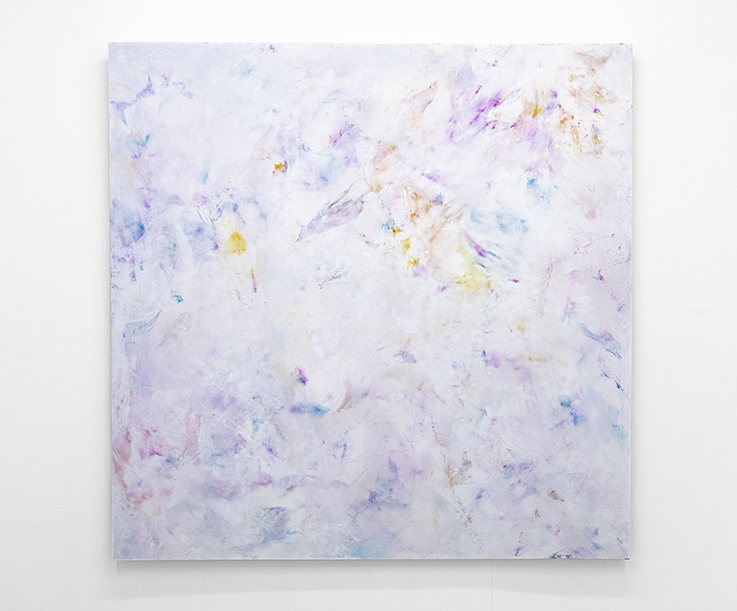
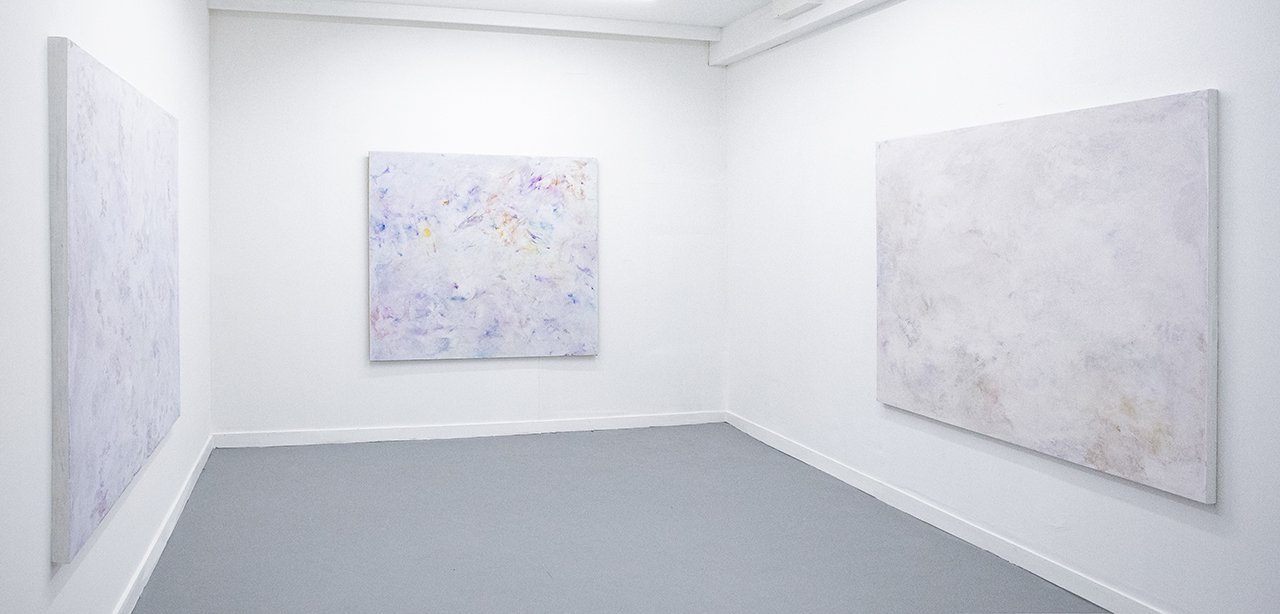
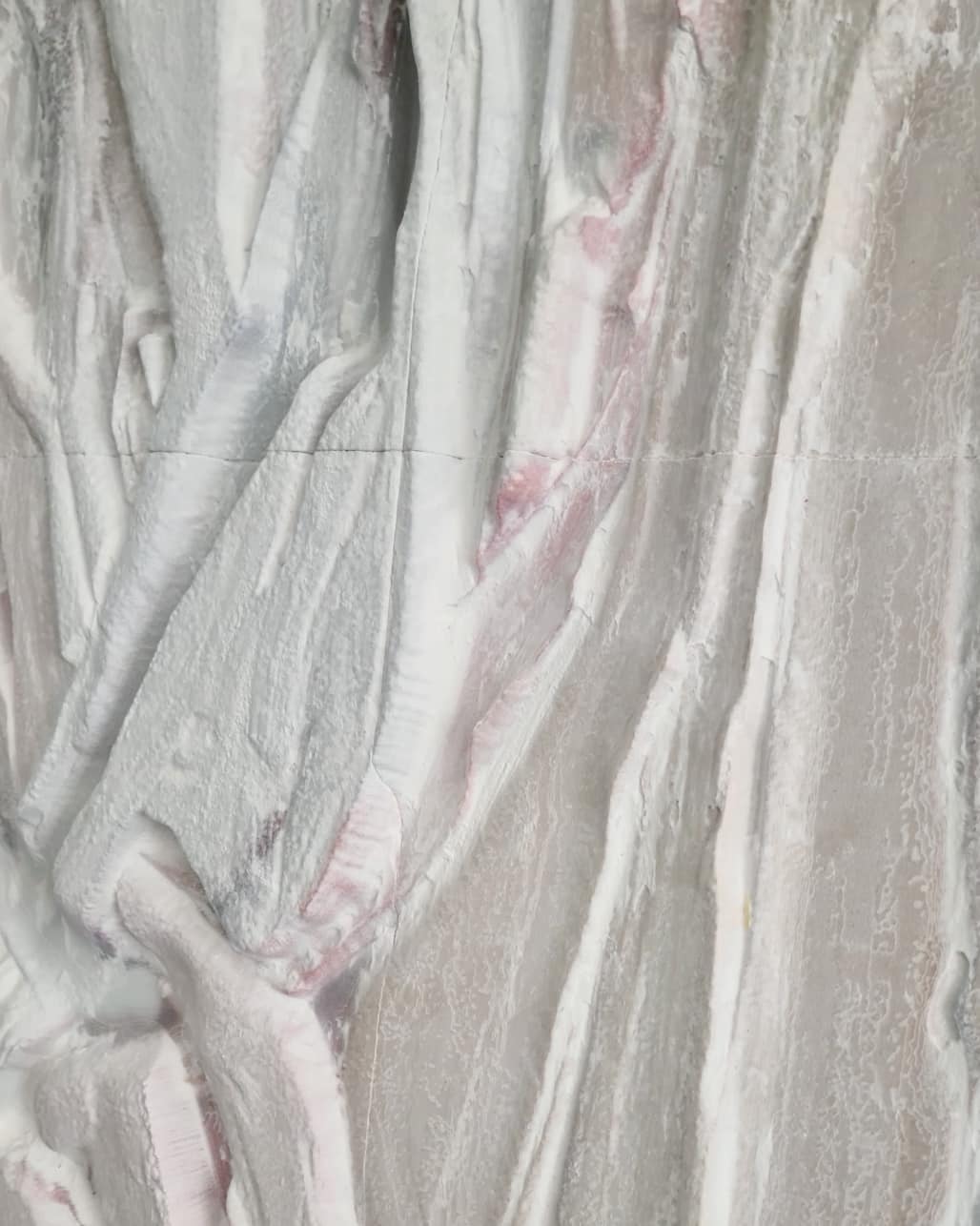
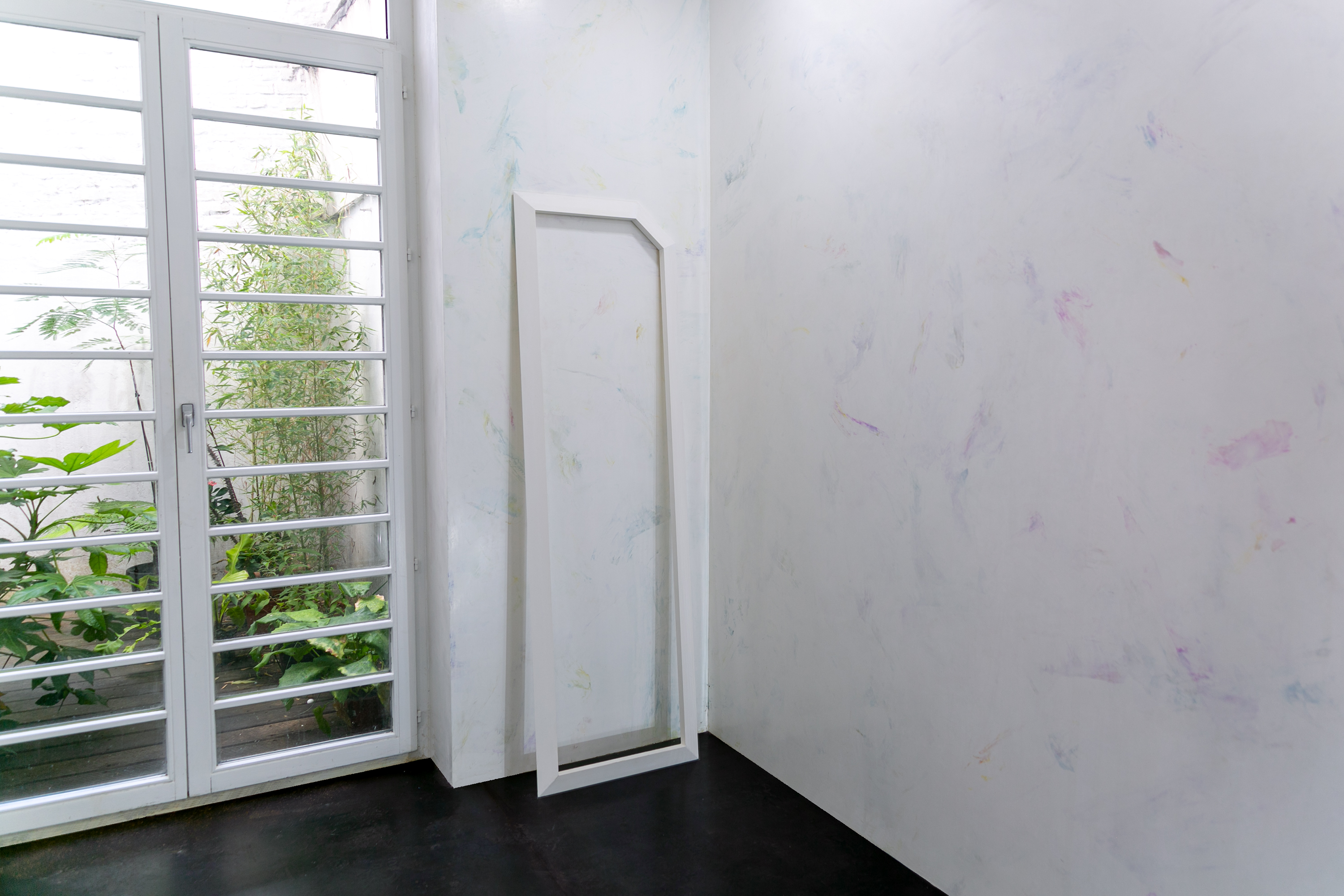
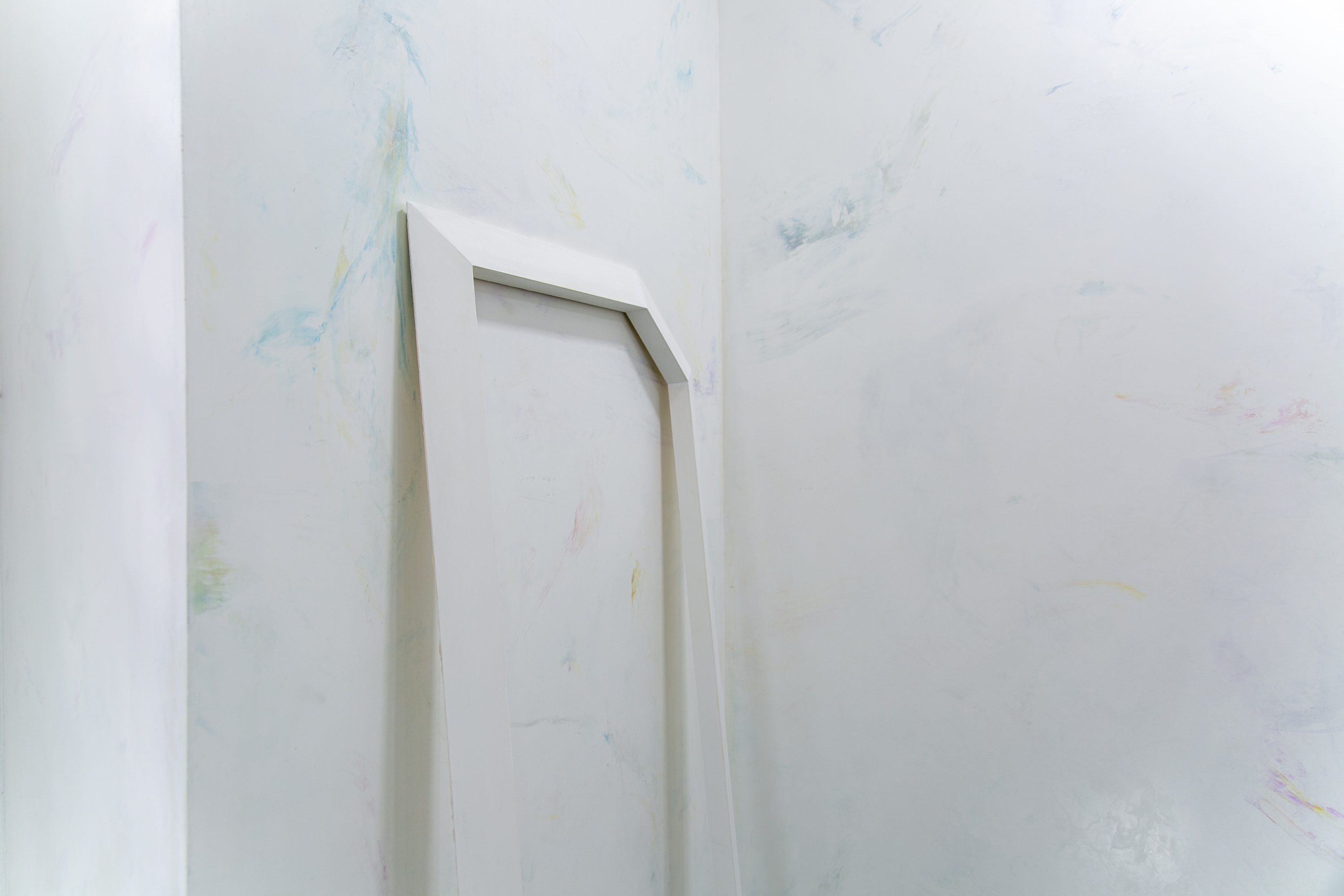
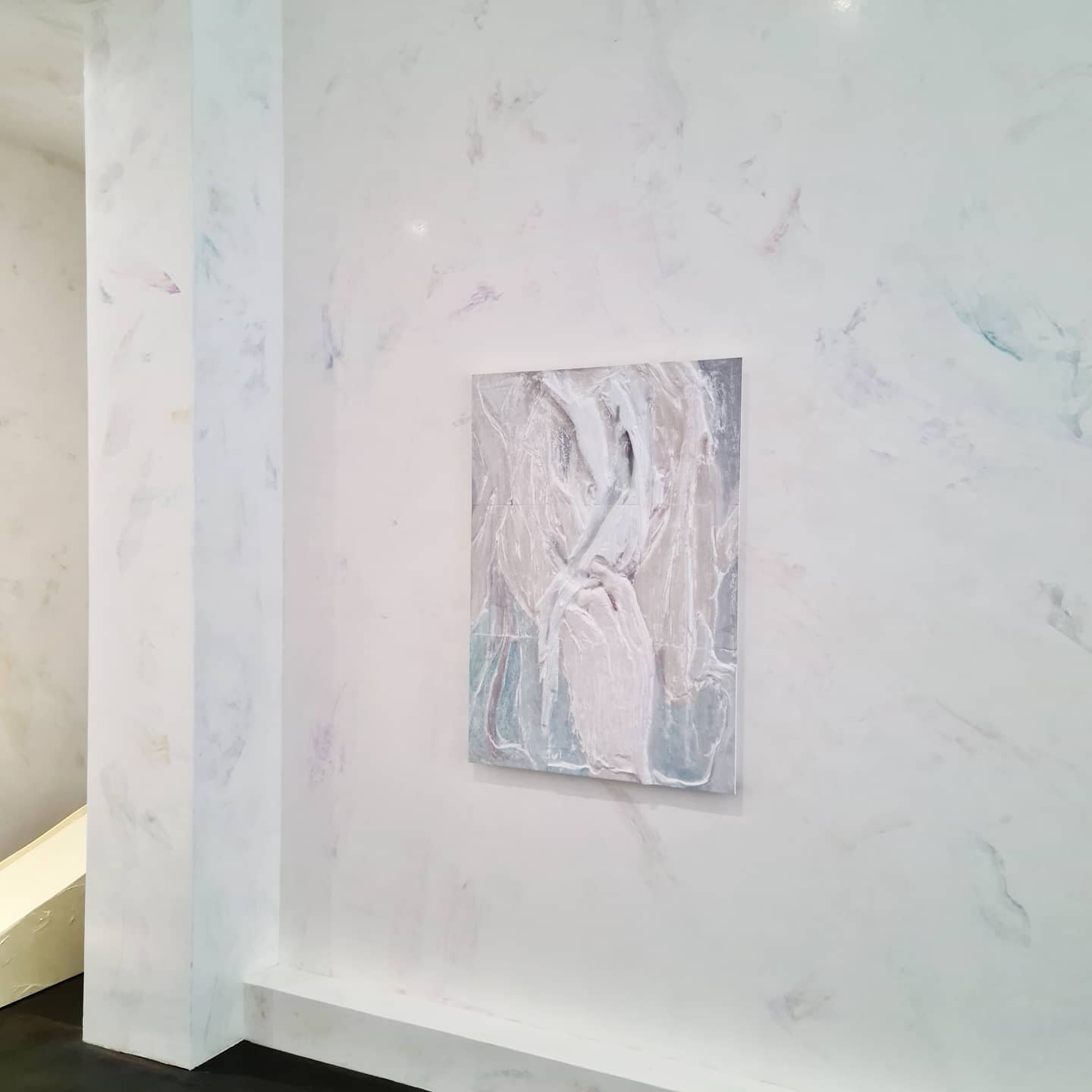
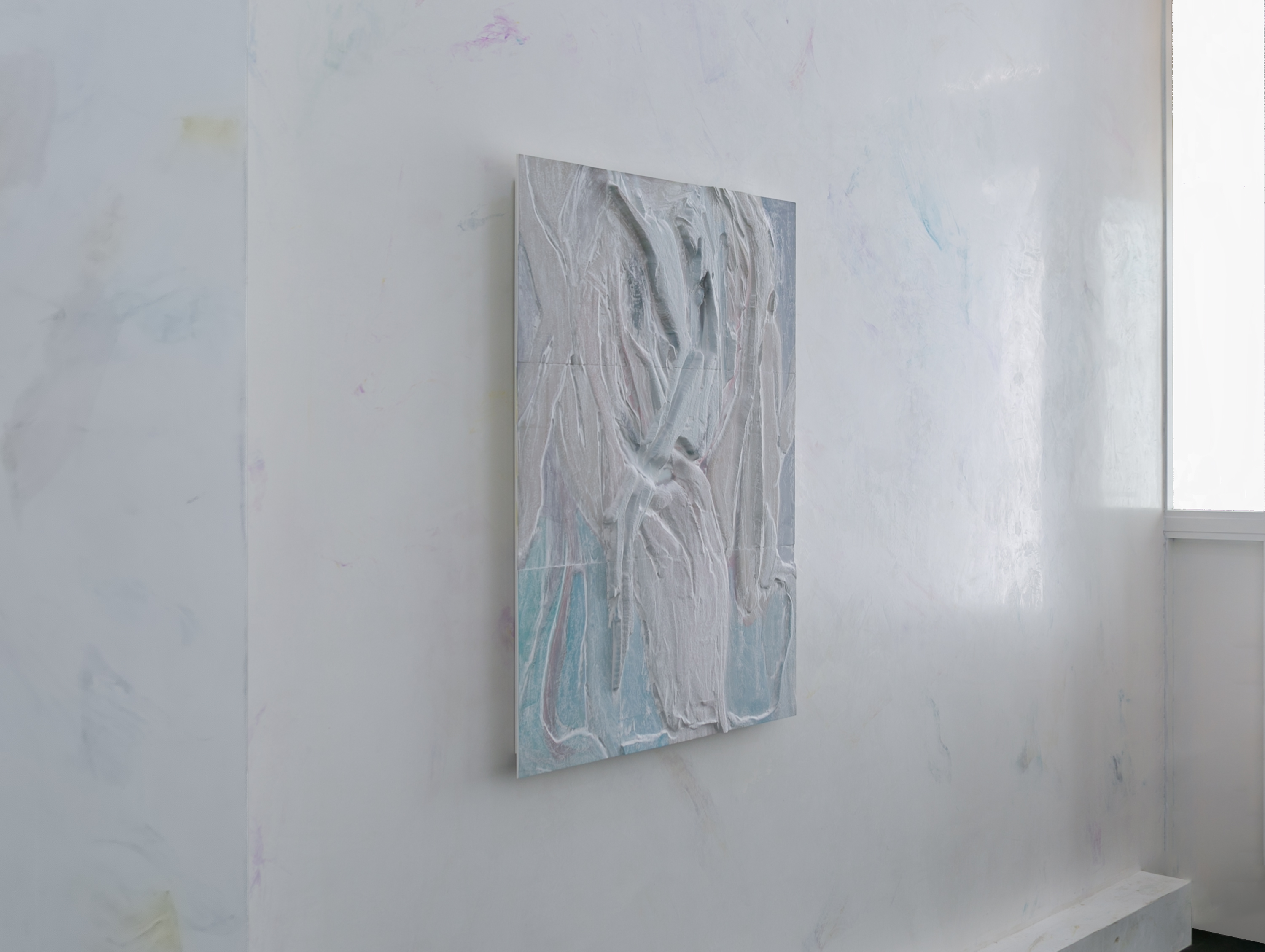
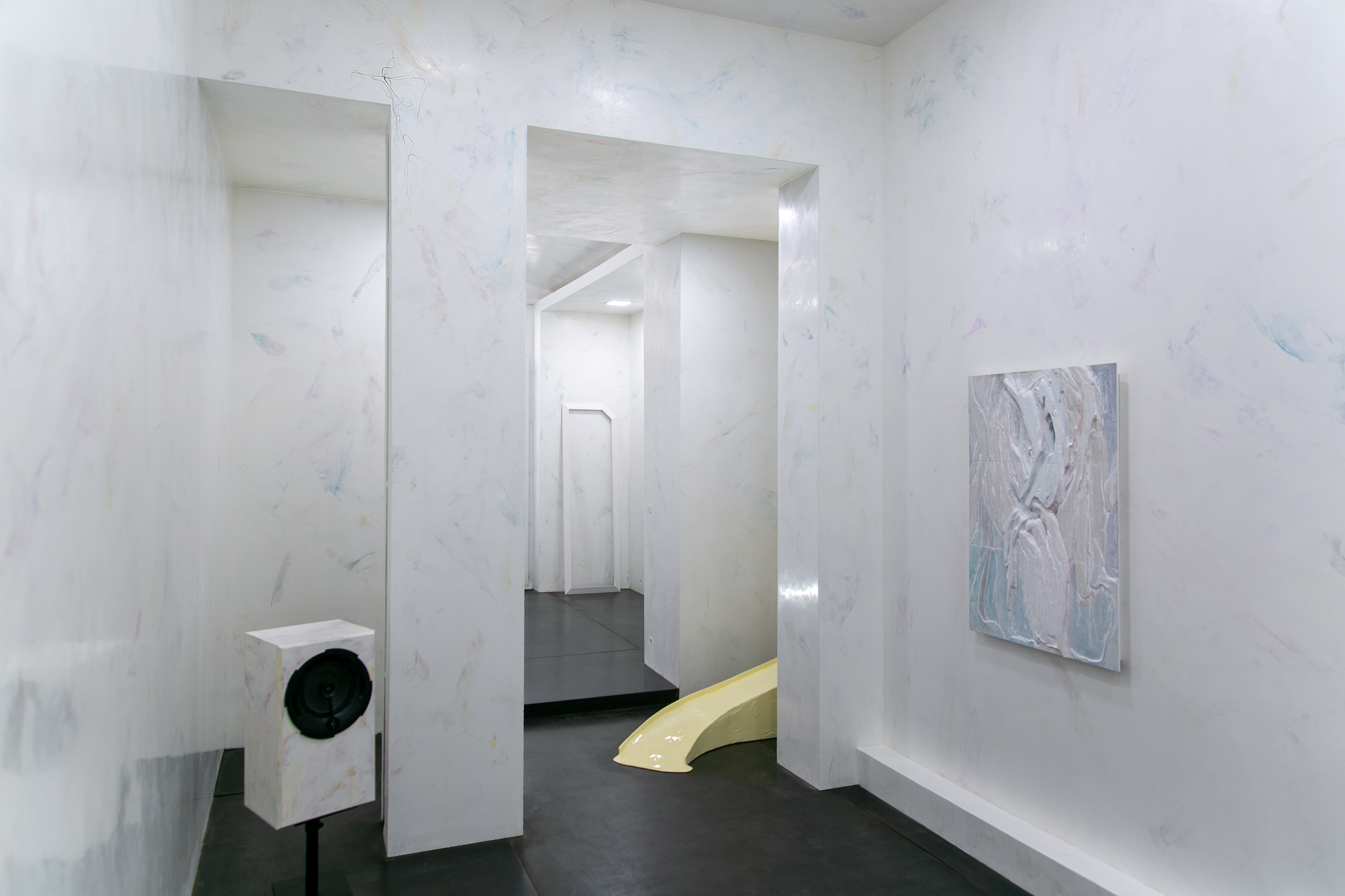
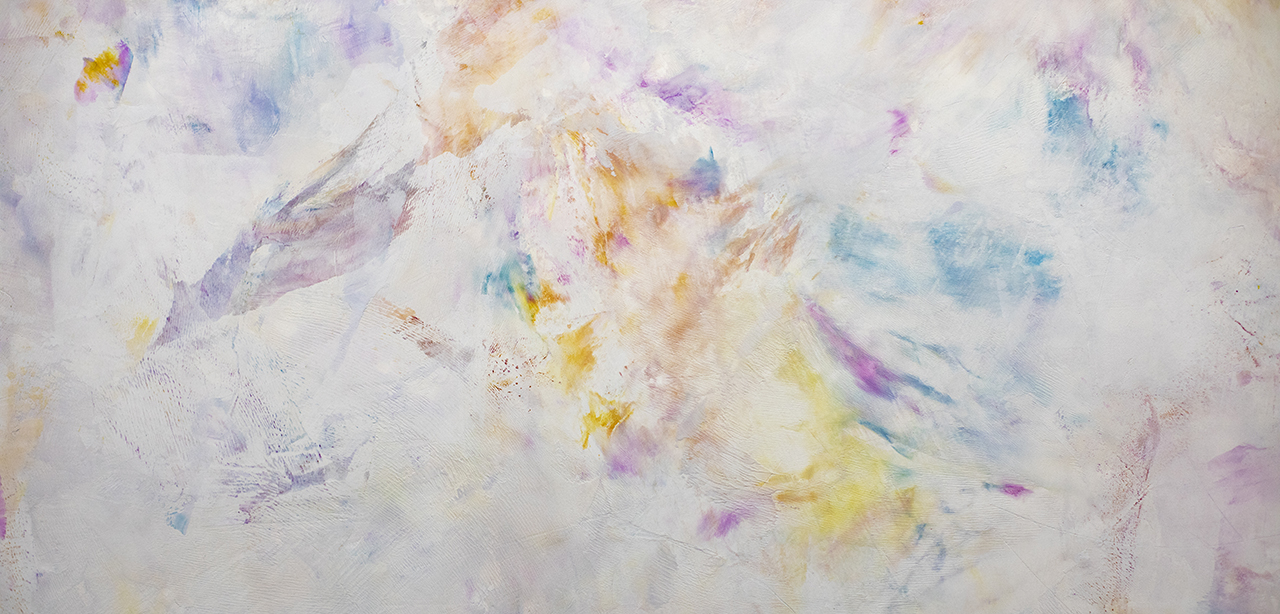
nūbēs by Raphaël Lecoquierre is an in-situ work in the form of an abstract fresco that stretches the length of the exhibition space. It was created from a collection of silver gelatin photographs found and then obliterated by an oxidation process. While the images dissolved, the artist extracted the coloured substances from them and incorporated the pigments into a stucco surface applied to the wall. The images documenting the world have disappeared and are renewed as interwoven abstract patterns on a nebular, ethereal pictorial surface.

The use of stucco and the method of ‘al fresco’ inking recall the ancestral traditions of Quattrocento Italian artists who used these methods so that their work would stand the test of time. The white tones of the plaster gives the work a cloudy, unfocused aspect that evokes the Renaissance sfumato technique that can also be found in some 19th century landscapes. But its smooth polished aspect also brings to mind the flat, shiny surfaces of our touchscreens.
This in-situ work is an extension of a series of works on wood that were begun in 2010.

The work raises questions about our relationship to images and the passage of time in our world that is implanted and submerged by the visual in an ultra-rapid ebb and flow of information. Most of our immediate information is the result of taking in sensations provided by images, particularly those from our screens. Their uncertain veracity and their alienating omnipresence, causes us to oscillate between a zest for life and loss of confidence, distress and hope. Working in a dialectic between destruction and creation, the installation is conceived as a ‘freeze frame’, contemplative and aware, evolving at the frontier of representation. Through a poetic and sensory approach, the work explores memory and invites the visitor to actively participate, by stimulating their imagination.

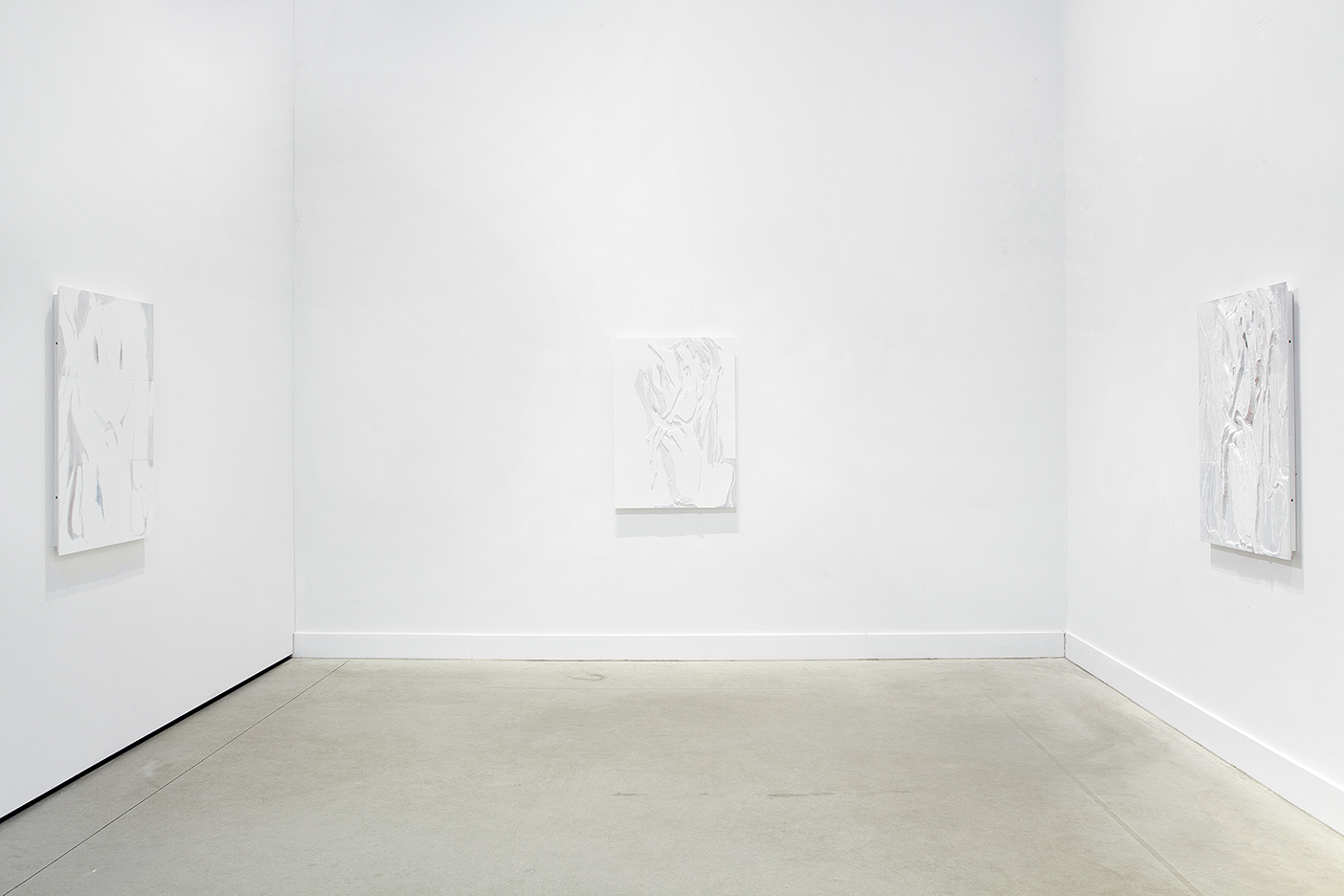
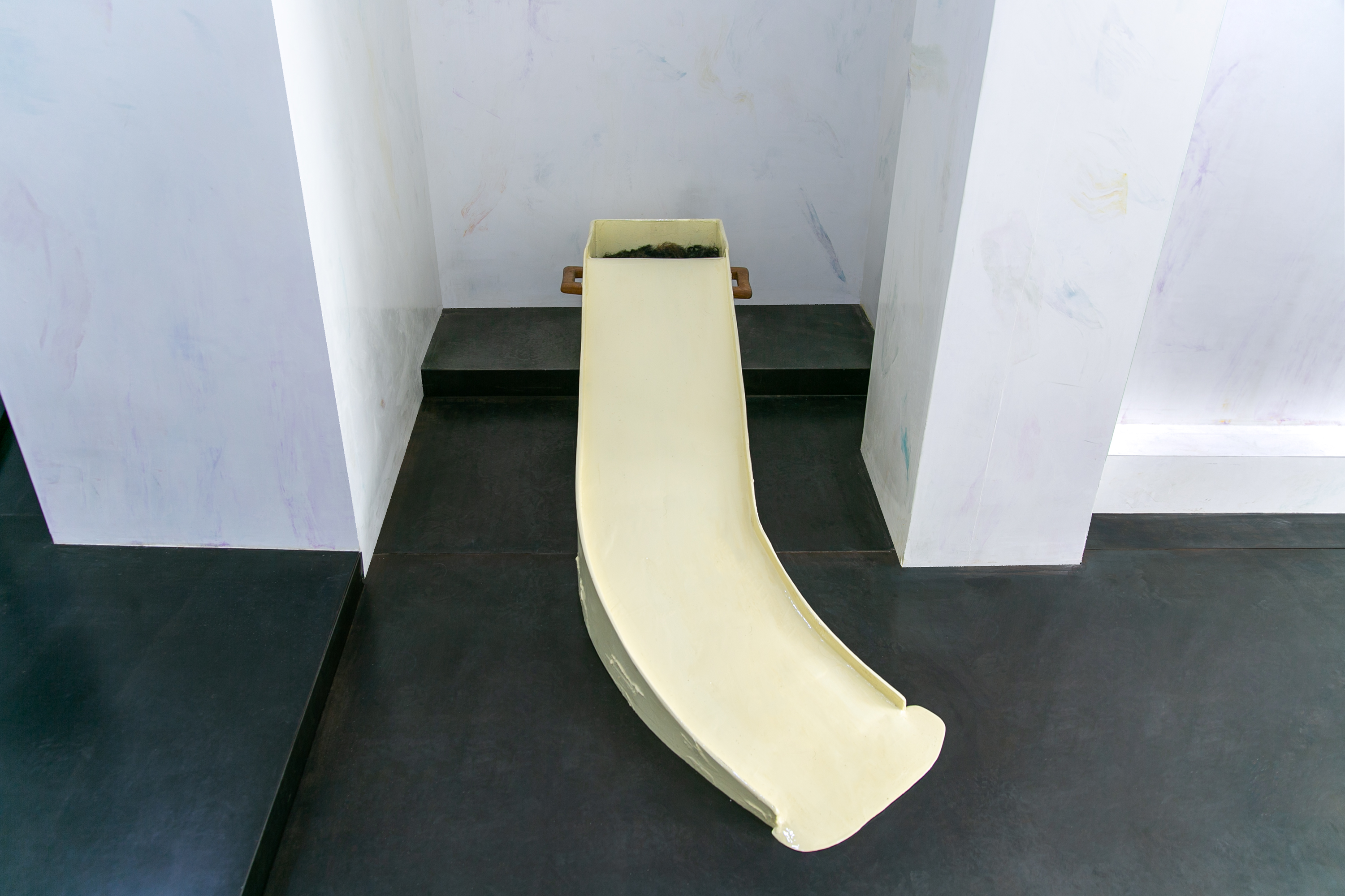
For the duration of the exhibition, five artists will be invited to take part successively in the installation by exhibiting their own sculptural, sonic, or painted works, which will interact with the fresco, while taking into account the inherent specificities of the Espace Moss project.
 

Nancy Moreno
Exhibition Title
Espace Moss
Brussels

nūbēs means cloud in Latin and is taken from a literary phrase by Virgil evoking the passing of time. Tempus fugit, sicut nubes, quasi naves, velut umbra / Time is fleeting like clouds, like ships, like shadows. Beyond the romantic symbolism attributed to clouds, they also represent the ephemeral nature of life and the instability of the human condition. It is also a reference to the ‘cloud’ in computing, the virtual servers that enable the storage and preservation of data.

nūbēs by Raphaël Lecoquierre is an in-situ work in the form of an abstract fresco that stretches the length of the exhibition space. It was created from a collection of silver gelatin photographs found and then obliterated by an oxidation process. While the images dissolved, the artist extracted the coloured substances from them and incorporated the pigments into a stucco surface applied to the wall. The images documenting the world have disappeared and are renewed as interwoven abstract patterns on a nebular, ethereal pictorial surface.

The use of stucco and the method of ‘al fresco’ inking recall the ancestral traditions of Quattrocento Italian artists who used these methods so that their work would stand the test of time. The white tones of the plaster gives the work a cloudy, unfocused aspect that evokes the Renaissance sfumato technique that can also be found in some 19th century landscapes. But its smooth polished aspect also brings to mind the flat, shiny surfaces of our touchscreens.
This in-situ work is an extension of a series of works on wood that were begun in 2010.

The work raises questions about our relationship to images and the passage of time in our world that is implanted and submerged by the visual in an ultra-rapid ebb and flow of information. Most of our immediate information is the result of taking in sensations provided by images, particularly those from our screens. Their uncertain veracity and their alienating omnipresence, causes us to oscillate between a zest for life and loss of confidence, distress and hope. Working in a dialectic between destruction and creation, the installation is conceived as a ‘freeze frame’, contemplative and aware, evolving at the frontier of representation. Through a poetic and sensory approach, the work explores memory and invites the visitor to actively participate, by stimulating their imagination.

For the duration of the exhibition, five artists will be invited to take part successively in the installation by exhibiting their own sculptural, sonic, or painted works, which will interact with the fresco, while taking into account the inherent specificities of the Espace Moss project.
 

Olivier Stévenart
Exhibition Title
Espace Moss
Brussels

nūbēs means cloud in Latin and is taken from a literary phrase by Virgil evoking the passing of time. Tempus fugit, sicut nubes, quasi naves, velut umbra / Time is fleeting like clouds, like ships, like shadows. Beyond the romantic symbolism attributed to clouds, they also represent the ephemeral nature of life and the instability of the human condition. It is also a reference to the ‘cloud’ in computing, the virtual servers that enable the storage and preservation of data.

nūbēs by Raphaël Lecoquierre is an in-situ work in the form of an abstract fresco that stretches the length of the exhibition space. It was created from a collection of silver gelatin photographs found and then obliterated by an oxidation process. While the images dissolved, the artist extracted the coloured substances from them and incorporated the pigments into a stucco surface applied to the wall. The images documenting the world have disappeared and are renewed as interwoven abstract patterns on a nebular, ethereal pictorial surface.

The use of stucco and the method of ‘al fresco’ inking recall the ancestral traditions of Quattrocento Italian artists who used these methods so that their work would stand the test of time. The white tones of the plaster gives the work a cloudy, unfocused aspect that evokes the Renaissance sfumato technique that can also be found in some 19th century landscapes. But its smooth polished aspect also brings to mind the flat, shiny surfaces of our touchscreens.
This in-situ work is an extension of a series of works on wood that were begun in 2010.

The work raises questions about our relationship to images and the passage of time in our world that is implanted and submerged by the visual in an ultra-rapid ebb and flow of information. Most of our immediate information is the result of taking in sensations provided by images, particularly those from our screens. Their uncertain veracity and their alienating omnipresence, causes us to oscillate between a zest for life and loss of confidence, distress and hope. Working in a dialectic between destruction and creation, the installation is conceived as a ‘freeze frame’, contemplative and aware, evolving at the frontier of representation. Through a poetic and sensory approach, the work explores memory and invites the visitor to actively participate, by stimulating their imagination.

For the duration of the exhibition, five artists will be invited to take part successively in the installation by exhibiting their own sculptural, sonic, or painted works, which will interact with the fresco, while taking into account the inherent specificities of the Espace Moss project.
 

Eva L'Hoest
Exhibition Title
Espace Moss
Brussels

nūbēs means cloud in Latin and is taken from a literary phrase by Virgil evoking the passing of time. Tempus fugit, sicut nubes, quasi naves, velut umbra / Time is fleeting like clouds, like ships, like shadows. Beyond the romantic symbolism attributed to clouds, they also represent the ephemeral nature of life and the instability of the human condition. It is also a reference to the ‘cloud’ in computing, the virtual servers that enable the storage and preservation of data.

nūbēs by Raphaël Lecoquierre is an in-situ work in the form of an abstract fresco that stretches the length of the exhibition space. It was created from a collection of silver gelatin photographs found and then obliterated by an oxidation process. While the images dissolved, the artist extracted the coloured substances from them and incorporated the pigments into a stucco surface applied to the wall. The images documenting the world have disappeared and are renewed as interwoven abstract patterns on a nebular, ethereal pictorial surface.

The use of stucco and the method of ‘al fresco’ inking recall the ancestral traditions of Quattrocento Italian artists who used these methods so that their work would stand the test of time. The white tones of the plaster gives the work a cloudy, unfocused aspect that evokes the Renaissance sfumato technique that can also be found in some 19th century landscapes. But its smooth polished aspect also brings to mind the flat, shiny surfaces of our touchscreens.
This in-situ work is an extension of a series of works on wood that were begun in 2010.

The work raises questions about our relationship to images and the passage of time in our world that is implanted and submerged by the visual in an ultra-rapid ebb and flow of information. Most of our immediate information is the result of taking in sensations provided by images, particularly those from our screens. Their uncertain veracity and their alienating omnipresence, causes us to oscillate between a zest for life and loss of confidence, distress and hope. Working in a dialectic between destruction and creation, the installation is conceived as a ‘freeze frame’, contemplative and aware, evolving at the frontier of representation. Through a poetic and sensory approach, the work explores memory and invites the visitor to actively participate, by stimulating their imagination.

For the duration of the exhibition, five artists will be invited to take part successively in the installation by exhibiting their own sculptural, sonic, or painted works, which will interact with the fresco, while taking into account the inherent specificities of the Espace Moss project.
 

Viager
Exhibition Title
Espace Moss
Brussels

nūbēs means cloud in Latin and is taken from a literary phrase by Virgil evoking the passing of time. Tempus fugit, sicut nubes, quasi naves, velut umbra / Time is fleeting like clouds, like ships, like shadows. Beyond the romantic symbolism attributed to clouds, they also represent the ephemeral nature of life and the instability of the human condition. It is also a reference to the ‘cloud’ in computing, the virtual servers that enable the storage and preservation of data.

nūbēs by Raphaël Lecoquierre is an in-situ work in the form of an abstract fresco that stretches the length of the exhibition space. It was created from a collection of silver gelatin photographs found and then obliterated by an oxidation process. While the images dissolved, the artist extracted the coloured substances from them and incorporated the pigments into a stucco surface applied to the wall. The images documenting the world have disappeared and are renewed as interwoven abstract patterns on a nebular, ethereal pictorial surface.

The use of stucco and the method of ‘al fresco’ inking recall the ancestral traditions of Quattrocento Italian artists who used these methods so that their work would stand the test of time. The white tones of the plaster gives the work a cloudy, unfocused aspect that evokes the Renaissance sfumato technique that can also be found in some 19th century landscapes. But its smooth polished aspect also brings to mind the flat, shiny surfaces of our touchscreens.
This in-situ work is an extension of a series of works on wood that were begun in 2010.

The work raises questions about our relationship to images and the passage of time in our world that is implanted and submerged by the visual in an ultra-rapid ebb and flow of information. Most of our immediate information is the result of taking in sensations provided by images, particularly those from our screens. Their uncertain veracity and their alienating omnipresence, causes us to oscillate between a zest for life and loss of confidence, distress and hope. Working in a dialectic between destruction and creation, the installation is conceived as a ‘freeze frame’, contemplative and aware, evolving at the frontier of representation. Through a poetic and sensory approach, the work explores memory and invites the visitor to actively participate, by stimulating their imagination.

For the duration of the exhibition, five artists will be invited to take part successively in the installation by exhibiting their own sculptural, sonic, or painted works, which will interact with the fresco, while taking into account the inherent specificities of the Espace Moss project.

nūbēs(...)surround is an exhibition concept that adapts to its environment and, in turn, becomes an environment itself.
Conceived as a porous and responsive structure, it accommodates shifting spatial, social, and atmospheric conditions.

Each iteration transforms according to its context, engaging wit the architecture, light, and circulation of the place it inhabits.

Rather than functioning as a static display, nubēs (...) surround operates as a temporary intervention - a host framework in which other works can be situated, reinterpreted, or absorbed. It invites a dialogue between autonomy and dependency, between artwork and setting, between what surrounds and what is surrounded. Through this reciprocity, the exhibition questions how form, space, and presence can remain open, mutable, and shared.

Chapter I took place at Espace Moss from xx.xx.xx to xx.xx.xx:
I.1: Viager
I.2: Eva L'Hoest
I.3: Olivier Stévenart
I.4: Nancy Moreno

Each presentation reconfigured the space, testing how the exhibition's structure could hold, shift, and regenerate around the works it hosted.
nübes (...)surround now continues at La Loggia, Avenue Molière 12, Vorst, where it again reshapes itself in response to its new environment - extending the ongoing exploration of how an exhibition can inhabit and be inhabited.